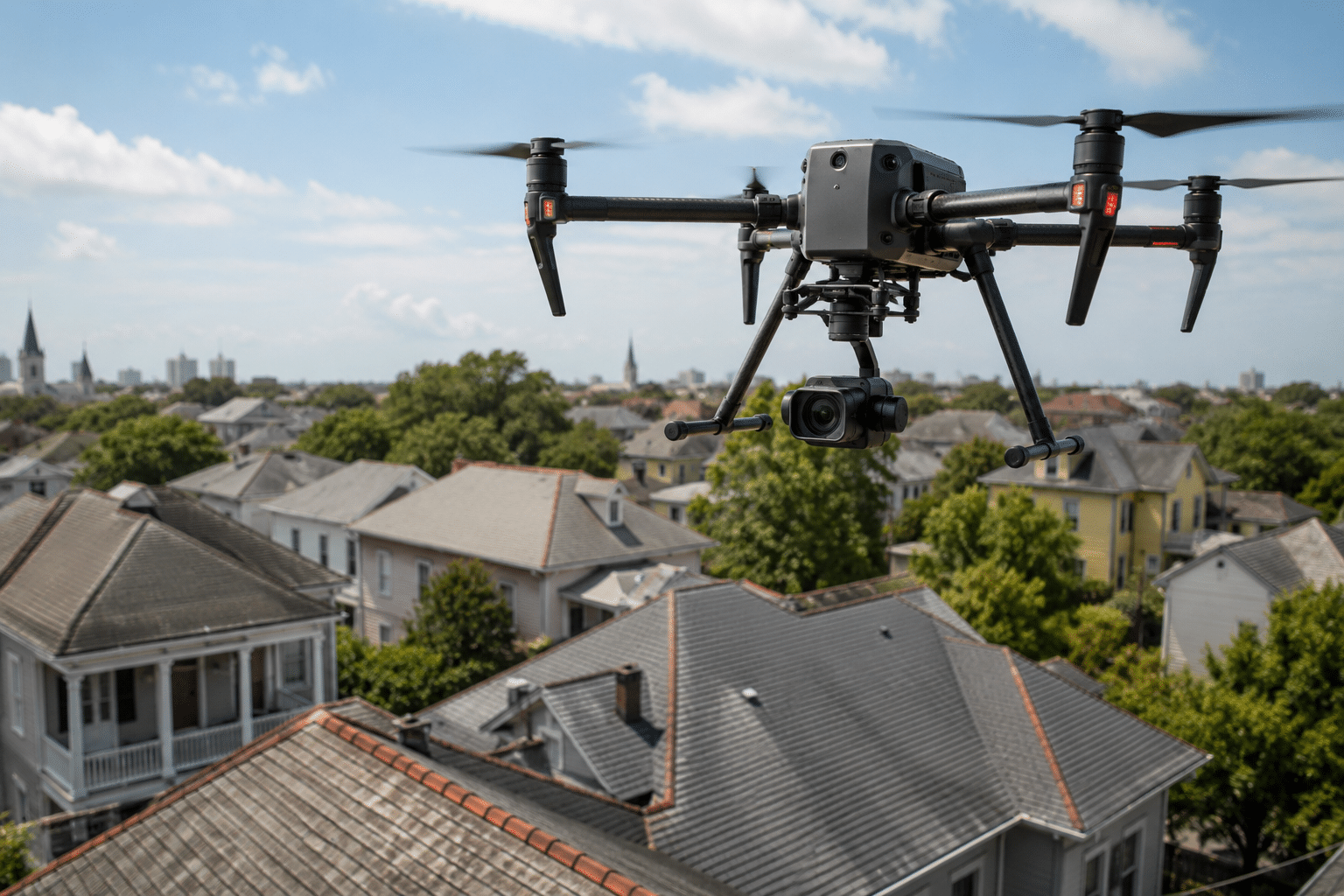
Roof inspections used to mean a technician on a ladder, walking a hot, humid rooftop with a clipboard. Today, drone and thermal imaging roof inspections give New Orleans homeowners a faster, safer, and far more detailed look at their roof’s true condition.
For a city where storms, heat, and humidity all take a toll on roofing systems, that extra layer of accuracy matters. TurnKey Roofing Contractor uses this technology to spot problems early, often before they show up as a leak inside the house.
Why Roof Inspections Are So Important in New Orleans
New Orleans roofs face a tougher year than most. Between tropical humidity, intense summer UV exposure, and the threat of hurricane-force wind and hail, roofing materials break down faster here than in drier climates. A roof inspection isn’t just a box to check after a storm; it’s an ongoing part of protecting a home in this climate.
Many New Orleans homes also have steep pitches, ornate rooflines, or aging materials that make traditional ladder inspections slow and sometimes risky. Add in the city’s historic housing stock, much of which sits close to neighbors with limited yard access, and a full manual inspection can be difficult to perform safely or completely.
What Local Homeowners Report
- Mysterious ceiling stains that appear weeks after a storm
- Higher-than-expected energy bills from hidden insulation gaps
- Granule buildup in gutters after heavy rain
- Soft spots near skylights, chimneys, or flashing
- Difficulty getting a full view of steep or multi-level roofs
- Concerns about safety when climbing older or damaged roofs
Why Traditional Inspections Fall Short
Standard roof inspections rely on what a technician can see and reach from a ladder or the roof surface itself. That works for obvious damage, but a lot of roof problems start with invisible trapped moisture under shingles, early-stage flashing failure, or insulation that’s lost its effectiveness long before a leak appears indoors.
Climbing every section of a roof also takes time and carries real risk. Roofing remains one of the more hazardous trades to work in, and unnecessary trips across a steep or wet roof add risk without always adding useful information.
In a city like New Orleans, where summer afternoon storms can roll in quickly, technicians also have a narrow window to complete a thorough walk-through before conditions turn unsafe.
Key Factors Limiting Manual Inspections
- Visual-only assessment misses moisture trapped beneath the surface
- Difficult access on steep, multi-story, or ornate historic rooflines
- Limited time before weather conditions become unsafe
- Risk of injury from walking on damaged or wet roof surfaces
- Inconsistent documentation between different inspection visits
- Inability to capture a full overhead view of large commercial roofs
How Drone and Thermal Imaging Technology Works
A drone equipped with a high-resolution camera can capture every angle of a roof’s ridges, valleys, flashing, vents, and gutter lines without anyone setting foot on the surface. TurnKey Roofing Contractor’s team flies under FAA Part 107 commercial drone regulations, the federal framework that governs any drone flight used for business purposes, including roof inspections.
Paired with thermal imaging, the drone can also detect temperature differences across the roof surface. Trapped moisture, failing insulation, and ventilation issues often show up as subtle heat signatures invisible to the naked eye but clear on a thermal scan.
This combination gives a far more complete picture than a visual walk-through alone, and it pairs naturally with services like roof leak detection and roof maintenance.
What This Inspection Includes
 High-resolution aerial photos of every roof section
- Thermal scans identify trapped moisture and heat loss
- Documentation of flashing, vents, and seams from multiple angles
- A detailed report homeowners can use for repairs or insurance claims
- Faster turnaround than a traditional manual inspection
- Safer process with no technician walking the roof surface
 High-resolution aerial photos of every roof section
The Benefits for New Orleans Homeowners
For homeowners, the biggest benefit is catching problems early before a small issue like a lifted shingle or a slow leak becomes a costly repair. After hurricane season, drone inspections also make it easier to document storm damage thoroughly, which can support hail damage roof repair claims with clear, time-stamped imagery.
Commercial property owners benefit too. Large flat or low-slope roofs common on warehouses and office buildings in the New Orleans area are often hard to fully assess on foot. A drone can survey the entire surface in a fraction of the time a manual commercial roof inspection would take.
Why New Orleans Homeowners Choose This Approach
 Faster scheduling, fewer hours spent on-site per inspection
- Clearer insurance documentation after storms or hail
- Early detection of moisture before it causes interior damage
- Safer process, especially on steep or storm-damaged roofs
- More accurate assessment ahead of roof repairs or roof replacement
- Useful baseline data for ongoing maintenance plans
 Faster scheduling, fewer hours spent on-site per inspection
Curious what a drone and thermal inspection would reveal about your roof? TurnKey Roofing Contractor offers free estimates and can schedule an inspection that fits your home’s specific layout and history. Contact the team today to get started.
Frequently Asked Questions
Is a drone roof inspection as accurate as a manual inspection?
In many ways, it’s more accurate. Drones capture every angle in high resolution, and thermal imaging reveals moisture and insulation issues that aren’t visible during a standard walk-through.
Does thermal imaging work on every type of roof?
Thermal imaging works well on most residential and commercial roofing materials, though results can vary with surface type and weather conditions. A technician will typically recommend the best time of day for an accurate scan.
Will a drone inspection help with my insurance claim?
Yes. Drone photos and thermal scans provide clear, dated documentation of roof condition, which often strengthens an insurance claim after storm or hail damage.
How long does a drone roof inspection take?
Most residential drone inspections take less time than a traditional manual inspection, often allowing same-day results since there’s no need to set up ladders or walk the roof.