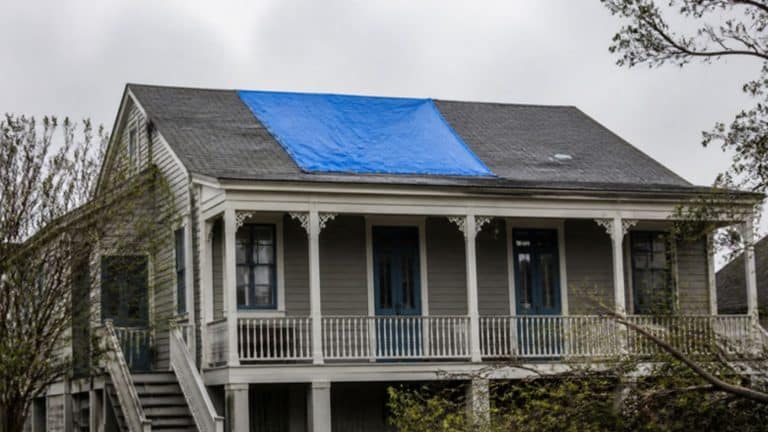
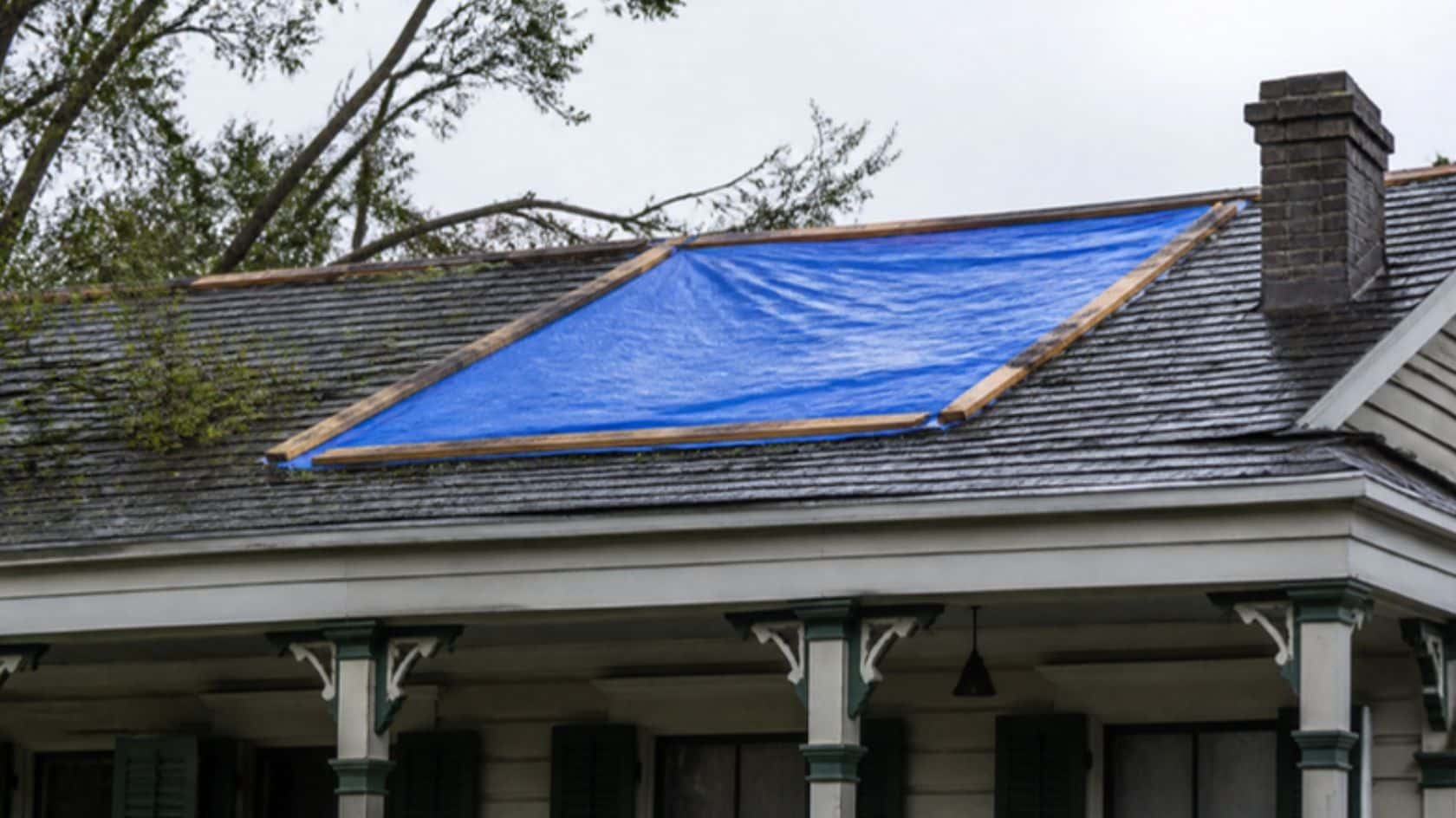
An emergency roof tarp usually costs a few hundred dollars. Two national cost guides, HomeAdvisor and HomeGuide, both put the average at about $450, with most jobs between $175 and $700. Large or complicated jobs can run past $3,000.
Neither guide publishes New Orleans figures, so read these numbers as national benchmarks. After-hours calls, steep or two-story roofs, tile roofing and a large damaged area all push the price up, and the real number for your house comes from a roofer who has seen the damage.
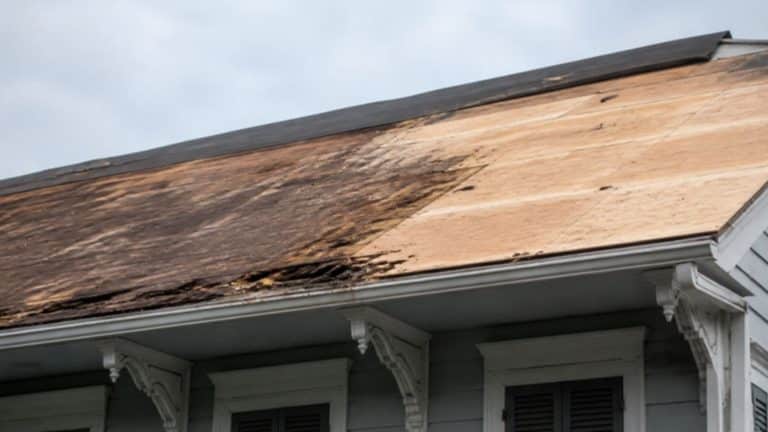
When a storm opens up your roof, the cost of a tarp matters less than how fast it goes on. Water that gets past the shingles soaks insulation, stains drywall and reaches the decking, and every hour adds to the eventual repair bill.
At TurnKey Roofing Contractor, we answer emergency calls around the clock and cover exposed areas so the damage stops spreading.
For storm damage that can wait until business hours, request a free estimate online and we’ll get back to you during office hours.
If water is coming in now, call (504) 608-3921 at any hour.
Key Takeaways
- HomeAdvisor and HomeGuide both list a national average of about $450 for roof tarping.
- HomeGuide puts standard tarping at $0.70 to $2.00 per square foot and after-hours emergency tarping at $1.00 to $2.80.
- Roof size, pitch, height, roofing material and the time of the call all change the price.
- A tarp is temporary. HomeGuide says a typical temporary tarp lasts 60 to 90 days.
- After some federally declared disasters, Operation Blue Roof installs free temporary roof coverings for eligible homeowners.
What an Emergency Roof Tarp Costs
An emergency roof tarp costs about $450 on average, according to national figures from both HomeAdvisor and HomeGuide. HomeGuide puts the usual range at $175 to $700, while HomeAdvisor reports a wider spread of $150 to $3,300 because its range includes large, complicated jobs. These are national benchmarks, not New Orleans prices.
HomeGuide prices installed tarping by the square foot of roof covered. Its table gives these totals for a standard installation:
| Area covered | Typical total (national) |
|---|---|
| 100 square feet | $70 to $200 |
| 250 square feet | $175 to $500 |
| 500 square feet | $350 to $1,000 |
| 1,000 square feet | $700 to $2,000 |
A tarp over one damaged section, such as a patch of missing shingles or the area around a fallen limb, falls in the smaller rows of that table.
A tarp over a whole slope, or several damaged areas on one house, moves the bill toward the higher rows. Your roofer should measure the opening and tell you the price before the work starts.
Why Emergency Tarping Costs More After Hours
Emergency tarping costs more after hours because the crew is called out at night, on a weekend or in the middle of a storm. HomeGuide lists after-hours tarping at $1.00 to $2.80 per square foot, compared with $0.70 to $2.00 for a standard job, and notes that a $100 to $200 call-out fee may apply outside regular business hours.
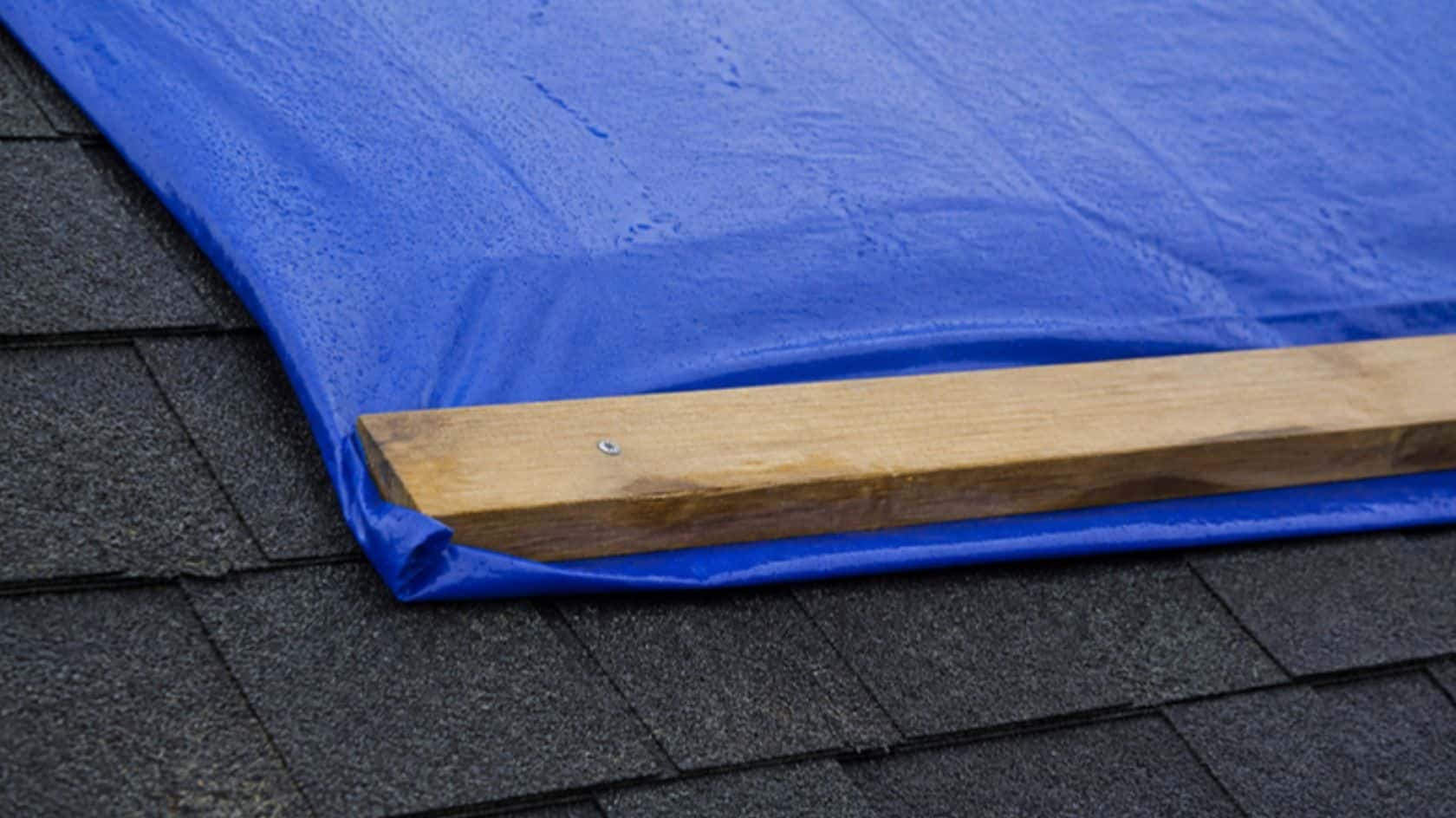
HomeAdvisor reports a similar pattern. It says roofers charge about $45 to $75 an hour for tarping, that most residential tarping jobs take 2 to 4 hours, and that emergency or after-hours service often runs 1.5 to 2 times the standard rate.
During a New Orleans roofing emergency, that premium is worth paying when water is actively coming through a ceiling or a tree limb has broken through the roof. Each hour of rain inside the house adds to the drywall, insulation and decking that will need repair later.
If the damage is minor and the forecast is dry, waiting for business hours can lower the cost. HomeAdvisor says scheduling even a day in advance can substantially reduce the price.
Our emergency roof repair service in New Orleans answers calls at any hour, so you can describe what you see and decide with us whether it needs a crew tonight or a visit in the morning.
What Changes the Price of a Roof Tarp
The size of the damaged area changes the price of a roof tarp more than anything else, since most roofers price by the square foot covered. After size, HomeGuide lists roof pitch, the number of peaks and valleys, the roofing material, whether the house has one story or two, and any debris that has to be cleared first.
These details push the price of storm damage tarping up:
- Steep or tall roofs. Multi-story homes take more time and safety equipment, according to HomeGuide.
- Tile or other thick roofing. HomeGuide notes that tarping over tile costs more than over asphalt shingles, since installers can’t nail through it.
- Complex rooflines. More peaks, planes and valleys mean more material and more careful anchoring.
- Debris on the roof. A fallen limb has to come off before the tarp can go on, and tree removal is often a separate charge.
- Heavier tarps. HomeAdvisor says roof tarps range from 10 to 25 mils thick, with thicker tarps lasting better in severe weather.
Materials are a small part of the bill. HomeAdvisor puts the tarp itself at about $0.10 to $0.30 per square foot, with the rest going to labor and the boards, cap nails or tape that hold the tarp down.
Many historic New Orleans homes were originally topped with slate, wood shake or clay tile, which makes tarping slower and a do-it-yourself attempt riskier. Our post on how hurricane season affects New Orleans roofs explains how storm stress shows up on different roof types.
When a Free Blue Roof Tarp May Be Available
A free tarp may be available after a federally declared disaster through Operation Blue Roof, which the U.S. Army Corps of Engineers runs for FEMA. The program covers damaged roofs with fiber-reinforced sheeting until permanent repairs are arranged, at no cost to homeowners, but only when FEMA assigns a mission after a disaster.
The Operation Blue Roof page from the U.S. Army Corps of Engineers lists the main requirements:
- The home must be the primary residence of the person asking for the covering.
- No more than 50 percent of the roof framing can be damaged.
- The roof must be shingles or a similar material that a tarp can be nailed to.
- Slate, asbestos or clay tile roofs can’t be covered, and metal roofs are considered case by case.
The Corps also warns homeowners that the program is free and that its representatives don’t ask for payment, Social Security numbers or bank account numbers. Anyone charging for a Blue Roof tarp should be reported to the FEMA Disaster Fraud Hotline.
The program only runs once a mission is assigned, and many historic New Orleans homes were originally topped with slate or clay tile, which the program can’t cover. If water is coming in now, a private tarp protects the house in the meantime.
Should You Tarp Your Roof Yourself?
Tarping your roof yourself saves on labor, but it is risky work on a wet, damaged surface. A storm-damaged roof is slippery and may not hold your weight, and a tarp that isn’t anchored well can tear loose in the next gust. HomeAdvisor warns that roof work carries significant fall risks, especially on wet or damaged roofs.
Stay off the roof itself and check what you can from the ground and from inside the attic. If a ceiling is bulging with water, move your belongings away from it and stay out from under it until help arrives.
A poorly placed tarp can also make things worse. HomeAdvisor notes that a tarp that isn’t installed properly can lead to further damage to the roof and the inside of the home.
Inside the house, you can limit the damage safely by catching drips in buckets, moving furniture and electronics out of the way, and photographing every stain and wet area. Our guide on securing your home after sudden roof damage walks through those first steps.
How Long a Tarp Lasts and What Comes Next
A temporary roof tarp lasts 60 to 90 days on average, according to HomeGuide, and HomeAdvisor gives a similar figure of about 90 days before a tarp degrades. Heat, sun and wind wear tarps down, so planning the permanent repair should start as soon as the tarp is on.
A tarp isn’t a fix. Tarping protects the roof from rain until a permanent repair can be made, and we plan and estimate that repair once the roof is secured.
The longer a tarp stays up, the more chances wind has to work it loose and water has to find a seam. Waiting through a second storm under the same tarp risks the damage you paid to prevent. Our post on how roof repair prevents bigger problems covers what happens when a small opening is left too long.
The permanent fix depends on what the roofer finds. Missing shingles, lifted flashing and a damaged vent boot are usually repairs, and our roof repair service in New Orleans matches new shingles to the existing roof as closely as possible.
When the damage is spread across the roof, replacement may make more sense. Our New Orleans roof replacement cost guide gives realistic ranges if it comes to that.
Keeping Records of Your Emergency Tarp
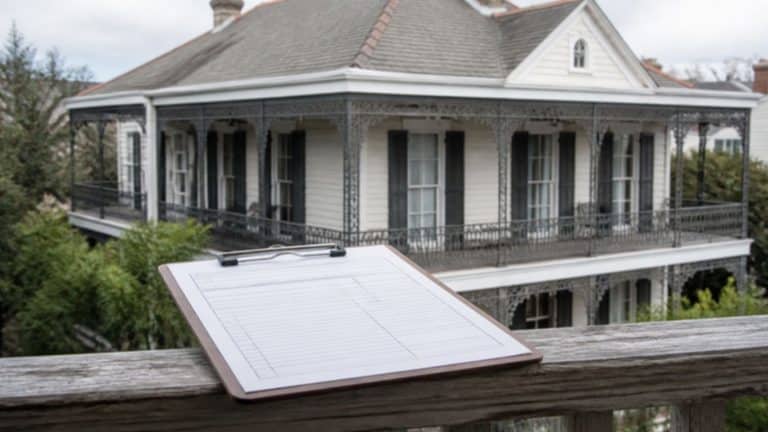
Keeping good records of an emergency tarp helps later, whatever comes next. Photograph the damage from several angles before cleanup, inside and outside, write down the date and time of the storm, and keep every receipt for the emergency covering. Then contact your insurer promptly and ask what your policy covers.
Questions about what a policy pays belong with your insurance agent or insurer, since every policy is different. What a roofer can give you is a clear record of the damage and the work done.
Ask for a written invoice that lists the area covered, the materials used and the date and time of the visit. Photos of the opening before the tarp went on, and of the finished tarp, round out the record.
Our post on the most common causes of roof leaks explains where storm water usually gets in, which helps you describe the damage when you call.
Before you hire anyone after a storm, ask for a license number. We’re a licensed local roofing company (Residential License # 890459), and our office is open Monday to Friday from 8:00 AM to 6:00 PM, with emergency calls answered around the clock at (504) 608-3921.
Frequently Asked Questions
How much does it cost to tarp a roof after a storm?
Is emergency roof tarping a permanent fix?
Why does an emergency roof tarp cost more at night?
Can I get a free blue tarp for my roof?
Should I go on my roof to put a tarp on it?
Written by: TurnKey Roofing Contractor
Last updated: November 11, 2026