25 Hour Roof Replacement Guarantee - Get Your FREE Estimates!
Residential License # 890459
Commercial License # 3667
Residential License # 890459
Commercial License # 3667

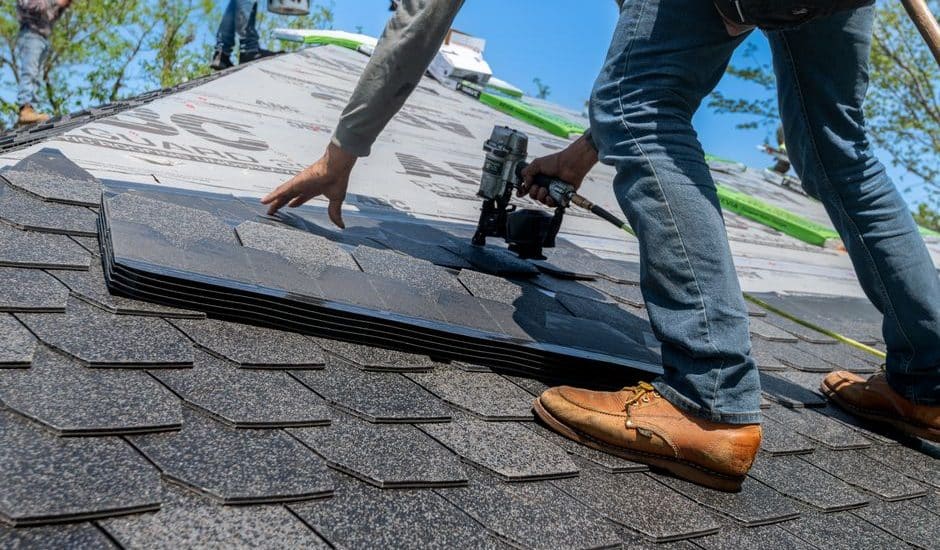
A full roof replacement in New Orleans typically costs between $9,000 and $22,000 for an average single-family home, or roughly $450 to $1,100 per square (100 square feet), depending on material, roof pitch, and whether FORTIFIED or historic district requirements apply. Asphalt shingle jobs sit at the lower end of that range, while standing seam metal, tile, and FORTIFIED certified roofs push the total higher.
The most reliable way to get an accurate number is a written, itemized estimate rather than a phone quote.
If a roofer just gave you a number over the phone, you are not looking at a cost, you are looking at a guess. New Orleans homes carry enough variables, roof pitch, decking condition, historic district rules, wind zone requirements, that two houses on the same block can see a $6,000 spread between quotes for the same job.
Before pricing matters, it helps to know if you need a full replacement at all. Our guide on Key Indicators You Need Roof Replacement covers the warning signs that separate a repair from a true replacement.
If you are already past that point, call (504) 608-3921 for a written estimate instead of a ballpark.
At TurnKey Roofing Contractor, we build every estimate around New Orleans conditions: humidity, hurricane wind loads, and historic district permitting. National cost calculators built for the Midwest or Southwest ignore the wind zone rules and FORTIFIED options available here, and they will steer your budget in the wrong direction.
So what actually goes into that number? A legitimate estimate covers far more than shingles and labor, and knowing what is included is the real difference between comparing quotes and comparing prices.
Every complete estimate should itemize each of these:
| Line Item | What It Covers |
|---|---|
| Tear-off and disposal | Removing old materials and hauling debris |
| Decking repair | Replacing rotted or soft plywood/OSB |
| Underlayment | Moisture barrier under the roofing material |
| Flashing | Detailing around chimneys, vents, and valleys |
| Roofing material | Shingles, metal, tile, or TPO, priced per square |
| Ventilation | Ridge and intake vents |
| Permit fees | City roofing permit, pulled by your contractor |
| Cleanup | Nail sweep and full site cleanup |
| Workmanship guarantee | Written warranty on labor |
Our residential roof replacement process itemizes every one of those line items on the estimate itself, so you are never left guessing what is covered until the invoice arrives.

Material choice is the biggest swing factor in your final price. Here is what New Orleans homeowners typically see per square (100 square feet) and for a full job on an average 2,200 to 2,600 square foot home:
| Material | Cost per Square | Typical Total |
|---|---|---|
| 3-tab asphalt shingles | $350 to $450 | $8,000 to $11,000 |
| Architectural asphalt shingles | $450 to $650 | $10,000 to $15,000 |
| Standing seam metal | $900 to $1,500 | $20,000 to $35,000 |
| TPO or flat roofing | $550 to $850 | Varies by footprint |
| Clay tile or slate | $1,200 to $2,000+ | $28,000 to $45,000+ |
Architectural shingles are the most common pick here because they meet most FORTIFIED wind-rating requirements without the cost jump of metal or tile. Standing seam metal costs more upfront but resists wind uplift better and lasts longer.
We break down that trade-off in Comparing Asphalt Shingles vs Metal Roofs.

National cost guides rarely fit New Orleans. Much of that gap traces back to the age and construction of the home itself.
We cover this in Why Roof Problems Are More Common in Historic New Orleans Homes, but the short version: steep, cut-up rooflines with dormers and valleys cost more in labor than a simple gable roof, older decking often needs full replacement instead of a re-cover, and homes inside an HDLC or VCC historic district add roughly $30 on top of the standard $60 city roofing permit, per nola.gov.
Louisiana’s wind zone codes, which call for enhanced fastening in a lot of parishes, add to that gap too.
Every estimate lists materials and labor. Almost none price in the cost of time.
During hurricane season, a home under tarps for three, five, or seven days while a crew works through a backlog is not just an inconvenience, it is added risk.
Every extra day under a tarp is another chance for wind-driven rain to find a gap, another day a claim stays open, and another day of hotel costs or patch repairs billed on top of the final invoice.
A slower job does not just cost more time, it quietly costs more money and raises the odds a fresh storm hits before the job is done.
That is the reasoning behind our 25-Hour Roof Replacement Guarantee: most residential replacements are torn off, decked, and fully replaced within a single 25-hour window, weather permitting, so your home is not left exposed for a week.
It also means your claim tends to close faster, without tarp fees or repeat storm damage stacking on top of your original quote.

Homeowners insurance in Louisiana typically covers roof replacement when the damage is storm related, wind, hail, or a fallen tree, but not age or deferred maintenance.
Adjusters look closely at a roof’s condition before approving a claim, one more reason a slow replacement timeline works against you: the longer a damaged roof sits exposed, the more secondary damage gets flagged as pre-existing.
We cover claims timing in How Hurricane Season Affects Roofs in New Orleans.
A FORTIFIED Roof, a wind-resistance standard from the Insurance Institute for Business and Home Safety, typically adds 5 to 15 percent to the cost of a standard replacement for the enhanced fastening and impact-rated materials it requires.
That premium is often offset by an insurance discount Louisiana insurers must offer FORTIFIED homes, plus the Louisiana Fortify Homes Program (LFHP), a state grant covering up to $10,000 of the upgrade.
Between the two, many homeowners land close to the cost of a standard shingle replacement.
Most Louisiana policies also carry a separate hurricane deductible, usually 1 to 5 percent of the home’s insured value, or a flat $1,000 to $5,000, applied before standard coverage kicks in. If financing matters, ask your contractor about payment plans directly.
Most cost guides skip commercial roofing entirely.
Commercial roofs are usually priced by total square footage rather than by square, and low-slope buildings typically use TPO instead of shingles, with costs that scale by drainage, insulation, and roof access.
If you manage a commercial property, our commercial roof replacement team can break down costs specific to your building.
Every roof replacement in New Orleans requires a city roofing permit, currently $60 as a base fee, with an additional $30 inside an HDLC (Historic District Landmarks Commission) or VCC (Vieux Carre Commission) historic district, per nola.gov.
Make sure your contractor pulls that permit, and confirm license numbers before signing anything.
TurnKey Roofing Contractor holds Louisiana Residential License #890459 and Commercial License #3667.
A roof replacement estimate is a schedule, a materials list, and a set of guarantees, and all three affect what you pay by the time the job wraps up.
Choosing the lowest bid often costs more once callbacks, delays, and rushed workmanship enter the picture.
We talk through why in The Long-Term Benefits of Roof Replacement.
If you want a real number instead of a guess, and a crew that closes the job in a single 25-hour window instead of leaving your home exposed for a week, contact TurnKey Roofing Contractor for a free, itemized estimate, or call (504) 608-3921 directly.
Asphalt shingle jobs are typically at the lower end, while metal, tile, and FORTIFIED certified roofs push the total higher.
In Louisiana, that generally works out to roughly $3.50 to $6.50 per square foot for asphalt shingles and $9 to $15 per square foot for standing seam metal, tile, or slate.
Most Louisiana policies also carry a separate hurricane or named-storm deductible, usually 1 to 5 percent of the home’s insured value or a flat $1,000 to $5,000, that applies before coverage kicks in.
Louisiana insurers are required to offer a premium discount for FORTIFIED homes, and the Louisiana Fortify Homes Program can cover up to $10,000 of the upgrade cost, which often offsets most or all of the added expense.
Homes located inside an HDLC or VCC historic district add roughly $30 on top of that base fee, according to the current schedule published on nola.gov.
For homeowners planning to stay in a home long term, metal often pencils out as the better value despite the higher initial price.

 10 July, 2026