25 Hour Roof Replacement Guarantee - Get Your FREE Estimates!
Residential License # 890459
Commercial License # 3667
Residential License # 890459
Commercial License # 3667

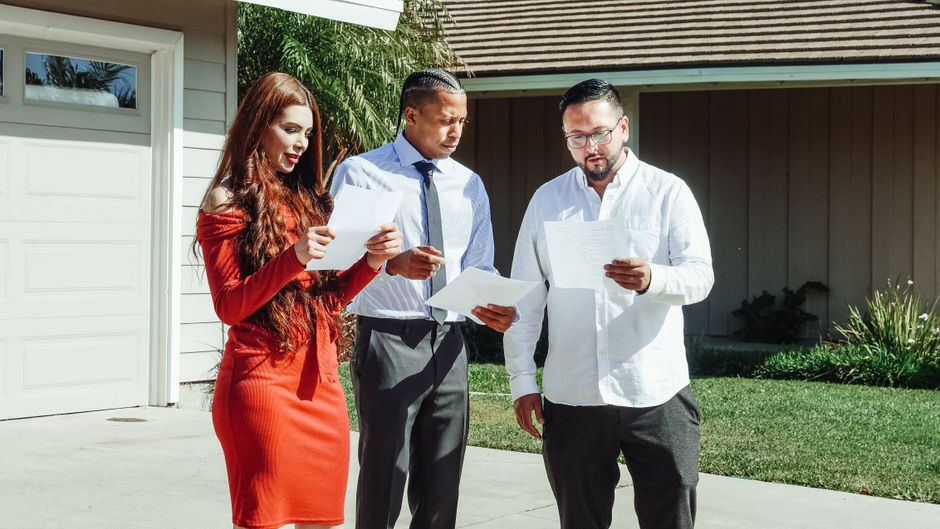
Once your roof damage is documented and your home is secured, the insurance claim itself moves through a fairly predictable sequence: filing, adjuster inspection, estimate and negotiation, approval or denial, payout, and repair. In Louisiana, each stage has a rough timeframe set partly by state insurance rules and partly by how quickly you and your insurer agree on the scope of loss, and knowing those windows ahead of time is what keeps a claim from stalling.
If you have not yet documented the damage or secured the property, that step matters more than anything covered here. Read How to Secure Your Home After Sudden Roof Damage first, then come back once the damage is photographed and the roof is tarped.
This post picks up exactly where that one leaves off.
Not every roof problem is claim-worthy, either. Key Indicators You Need Roof Replacement walks through the signs worth a second look before you file.
Once confirmed real and recent, TurnKey Roofing Contractor can help document the scope before the adjuster arrives.
No two claims move at the same pace, but Louisiana’s claims-handling rules give a realistic range for each stage. Use this as a bookmark for where your claim should be.
| Stage | Typical Timeframe | What’s Happening |
|---|---|---|
| Filing the Claim | Day 0 to 3 | You report the loss, receive a claim number, and submit initial photos and notes |
| Adjuster Inspection | Within 14 days (up to 30 after a declared disaster) | The insurer’s adjuster walks the roof, documents damage, and opens a scope of loss |
| Estimate and Negotiation | Weeks 2 to 6 | Your contractor’s line-item estimate is compared to the insurer’s, and supplemental claims are filed for gaps |
| Approval or Denial | Within 30 days of proof of loss (60 to 90 for catastrophic or commercial claims) | The insurer pays the undisputed amount, denies the claim, or offers less than the scope supports |
| Payout | Weeks 6 to 12 | ACV funds are released first, with RCV depreciation held back until repairs are complete |
| Repair and Final Payment | Weeks 8 to 16+ | Your contractor completes the work, submits the completion certificate, and the recoverable depreciation is released |
Filing starts with a call to your insurer’s claims line, not to a contractor. Give the date of loss, a summary of the damage, and the photos you already have.
You will get a claim number and an adjuster assignment within a few business days. This is also the moment to schedule a licensed roof inspection, since an independent report gives you your own record of the damage separate from the insurer’s.
Louisiana requires insurers to begin adjusting within 14 days of your reported loss, extended to 30 days after a declared disaster. If you have not heard from an adjuster within that window, call your insurer and ask for a status update in writing.

When the adjuster arrives, they measure the roof, photograph the damage, and note the covered peril (wind, hail, or a named storm). Try to be present, or have your contractor there, since a scope of loss written without anyone pointing out hidden damage, like soft decking or displaced flashing, tends to run short.
Ask for a copy of the scope of loss before the adjuster leaves, since it becomes the baseline for every conversation that follows.
For a straight answer on timing, call (504) 608-3921 after the adjuster’s visit and we can compare their scope against a contractor-level estimate the same week.
Most Louisiana insurers price claims using Xactimate, a line-item estimating software that breaks the job into materials, labor, and overhead. Your contractor’s estimate should be built the same way so the two documents compare apples to apples.
Where the scope of loss misses something (decking, code-required upgrades, ventilation, flashing), your contractor files a supplemental claim with photos and cost documentation to close the gap. This is where most underpaid claims get corrected, and where a contractor fluent in Xactimate line items, rather than a generic bid, makes the biggest difference.
Louisiana law requires insurers to pay the undisputed portion of a residential claim within 30 days of receiving satisfactory proof of loss, extending to 60 days for catastrophic residential losses and 90 days for non-residential property. If your claim is approved, this is where the clock starts for payment.
If denied or underpaid instead, ask in writing for the policy language the denial cites. If the dispute is only about the dollar amount, either side can invoke the policy’s appraisal clause: each party picks an appraiser, the two appraisers pick a neutral umpire, and the umpire’s decision on the amount of loss is binding.
A public adjuster, working for you rather than the insurer, can be worth the cost on a large or contested claim, and the Louisiana Department of Insurance (LDI) accepts complaints against insurers who miss deadlines or act in bad faith.
Watch your filing window too. Louisiana homeowner policies have historically required a lawsuit over a denied claim within one year of the date of loss, though recent changes to the state’s prescriptive periods make it worth confirming the exact deadline with LDI or an attorney.
If your damage came from a hurricane or a named storm, your deductible is likely a percentage of your dwelling coverage rather than a flat dollar amount, often 2 to 5 percent depending on your policy. On a $300,000 dwelling limit, a 2 percent named-storm deductible is $6,000 before the insurer pays anything, well above a standard $1,000 or $2,500 flat deductible.
How Hurricane Season Affects Roofs in New Orleans covers how that deductible interacts with storm timing and roof age.
Most Louisiana roof policies pay on a replacement cost value (RCV) basis, but payment arrives in two pieces. The first check reflects actual cash value (ACV), RCV minus depreciation for the roof’s age and condition.
The difference, recoverable depreciation, is held back until the roof is replaced and your contractor submits a completion certificate.
If you have a mortgage, expect the check issued as a two-party check made out to both you and your lender, who will typically require the completion certificate before endorsing the final portion. A contractor who documents thoroughly speeds this up rather than slowing it down.

Not every contractor is set up to work a claim well. Ask whether they write estimates in Xactimate, since a different format is harder to reconcile against the insurer’s scope.
Ask whether they will meet the adjuster on site, since a contractor there catches missed damage a homeowner alone might not notice, and be wary of anyone who demands full payment upfront. TurnKey Roofing Contractor holds Louisiana Residential License #890459 and works directly with adjusters on claim-based replacements, and The Long-Term Benefits of Roof Replacement explains why that quality affects how long the roof performs afterward.
Commercial property owners go through a similar process, with added tenant coordination and business-interruption considerations. If your building needs attention beyond one claim, Commercial Roof Maintenance in New Orleans covers what an ongoing maintenance plan looks like afterward.
A Louisiana roof claim is rarely instant, but it is predictable once you know the stages. File promptly, push back on a scope that misses real damage, and understand your payout before signing.
For a second set of eyes on your estimate, contact TurnKey Roofing Contractor or call (504) 608-3921 and we will walk through where your claim stands.

The biggest factor is how quickly the adjuster inspects the roof and how closely the estimate matches the actual scope of damage.
Your contractor compares that scope against their own estimate and files a supplemental claim for anything missed, such as decking, flashing, or ventilation.
Insurers do not assign roofing contractors on residential claims, though some may recommend preferred vendors, and you are never obligated to use one.
A public adjuster or a complaint to the Louisiana Department of Insurance are additional options for underpaid or mishandled claims.
Replacement cost value (RCV) is the full cost to replace the roof, with the remaining recoverable depreciation paid only after the work is completed.
If you have a mortgage, expect a two-party check that requires your lender’s endorsement.

 14 July, 2026